Daily pages of reflection...for knowledge, understanding, to wisdom
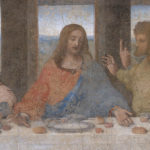
Section of The Last Supper, Leonardo Da Vinci Section of The Last Supper, Leonardo Da Vinci

Faith And Trust

Section of The Crucifixion, Pedro Orrente, ca. 1625–30

Mankind is so tied to earth that we may fumble in the way heaven deals with us.  To communicate with earth may be, for God, not unlike the difference between a parent and child.  The parent is heard to say to the child, in a conversation dealing with a sophisticated concern: Trust me in this, we will work it out and you will be happy with it.  The trusting child does not ask for documentation, or written contract, or an advance on the promise – or anything more than the word of someone the child loves, is dependent upon, and finds the promise to be enough.  There is analogy here, in that earth experience is a shadow of heaven experience. … Read more
Stock Market

Section of The Infant Jesus and St. John the Baptist, Guido Reni, n.d.

This Page is being written while an economic downturn noted in the Freshman edition of this date continues, perhaps with greater fear and disappointment in the population than attended the unexpected break with prosperity in 1987.  The first decade of the new century, and millennium, has moved from rather high optimism to a hunker down population, weakness in the banking system, teetering bankruptcy for whole governments and major businesses, failure of managements, and insecurity on many sides.  My purpose here is not to become an amateur economist, but to address issues as I believe they ought to be encountered, in a biblical concept of life management.  My views are related to the concepts of Scripture related to righteousness, to personal… Read more

History Models

Section of Christ and the Woman of Samaria, Benedetto Luti, 1715-20

My major secular interest in college and university was in the oral/written use of language, its past and present – and what it might mean for the future of mankind.  I have never regretted my choice.  My minor along the way was history, and I have never regretted that choice.  Both were important in my theological studies.  I have been disappointed in what appears to be the loss of interest on the part of many scholars in both fields.  Gradually, during my lifetime, the omissions in instruction have, as I view it, been costly to the development of the American Experience, and the recognition of spiritual principles, especially for evangelism and spiritual nurture aided by language interests.  In recent months… Read more

Learning Leadership

Section of The Taking of Christ, Caravaggio, 1602

Leadership, strong and ethical, is necessary to an effective free society.  God wants mankind to be free so to account for self and from there to society and God.  Redemption turns on free choice to be God’s child, or to turn away for whatever other option or options may be available.  Can a person lead himself or herself?  Can that person lead in the nuclear or extended family?  Can that person lead in society?  Everyone leads in some ways, and follows in some ways.  In the context of any time and event, the person may be a leader, or in that context/event may be a follower.  There are those who approach being ciphers in that they neither want to lead… Read more

Strength As A Decision

Section of The Last Supper, Leonardo Da Vinci

On the route to personal peace, and confidence in one’s faith, is the rightful concept of cooperation with others at any level of legitimate life involvement.  Many Christians interpret compromise (cooperation with) as surrender (agreement with).  For these to cooperate with a pagan is to imply agreement with the basic context of that person, even to identify with the culture and errors of any colleague relating to this purpose and meaning.  Therein is a major misunderstanding of Common Grace.  I read that Jesus followed custom in going to the synagogue.  He was in disagreement with the shifting that many leaders in the Jewish culture had made in the scriptural directives vital to his message of truth.  Nevertheless, he would not… Read more

Fundamentals

In Volume 1, for this date, we began with homiletics and ended up with reference to fundamentalism.  Any reference to the fundamentals of anything begs for explanation.  What is meant?  We are driven to a lesson in language.  What a word (symbol) denotes is not necessarily what it connotes.  At its best, a term denotes rather clearly one thing, one concept perhaps with previously agreed upon boundaries of meaning in the terms used.  Nearly any word (term or symbol) may be interpreted with emotional contexts (to advantage or disadvantage in the debate).  In a controversy, the uses of language may communicate the opposite of what the term meant in its long-term denotation.  This may be illustrated in numerous contexts, but… Read more

Substantive Sermons

Section of The Crucifixion, Pedro Orrente, ca. 1625–30

Sermons have proved important to history.  Major reading for George Washington was the sermon.  He received sermons from various churchmen, including his pastor, and had bound many sermons.  They were filed in his library, and reread as valuable in the formation of his beliefs and action.  Abraham Lincoln, reserved in the matter of organized religion, gave considerable time to study of the Bible, and what was said by clergy.  His later speeches carried biblical allusions, and style.  We may be disappointed about the historical evasions about Lincoln’s church identity.  Thomas Freiling reviewed the matter in his book, Walking With Lincoln.  References of persons from nearly every related life context support the belief that sermonizing in the Christian tradition has been… Read more

Elections

Section of The Crucifixion, Pedro Orrente, ca. 1625–30

In its primary meaning the word Christian stands for the individual, the person who has confessed personal need for God, and the acceptance of the redemption of Christ for status with God, to which status he or she attaches hope for immortality.  In that meaning, no institution, or nation can be called Christian.  But as words are made to stand for other than their primary (first) meaning, so does the word Christian.  In this sense a nation can be said to be more-or-less Christian (christianly) than any other or more-or-less than that nation may have been in its history.  Islam is rather stern about believing that its adherents live as national citizens under the banner of Islam, so to be… Read more

Father Mystery

Section of Christ and the Adulteress, Lucas Cranach the Younger and Workshop, ca. 1545–50

Fatherhood is a major theme well worthy of our study, perhaps with imagination relative to its meaning.  Of the various terms that God appears to be comfortable in assigning his meaning to mankind, father is one.  He uses other words, not considered here except to note that each one reflects some factor of God’s relationship to mankind – or his nature.  (Families no longer use meaning in the names they choose for their children – a shift from much of history.)  When a person uses the phrase for God, the Man upstairs, he or she is close to irreverence, perhaps has crossed over without realizing it.  God is God, Lord, Savior, Friend, Creator, Shepherd, King, Comforter.  Handel’s librettist included that… Read more

Minority Opinion

Section of The Taking of Christ, Caravaggio, 1602

Society ought to look beyond the sciences (nature/knowledge) and mechanics (work/arts) in its education and civics (humanity/citizenship).  Almost always, when the subject is broached, the purpose of education in the world is currently related to some professional context that will provide for the student a better income, and higher prestige in job selection than day laborers who without significant formal education will perform ordinary assignments in serving public needs.  These latter are presumed to relate to a few days or months of training in skills that presumably require little in formal education.  The two groupings are not really that far apart when one accents the historic uses of education, accents that may have been muted.  Historically a person was not… Read more