Daily pages of reflection...for knowledge, understanding, to wisdom
Section of The Last Supper, Leonardo Da Vinci Section of The Last Supper, Leonardo Da Vinci

Gentleness

Section of The Crucifixion, Pedro Orrente, ca. 1625–30

This magnificent passage of Scripture needs to be quoted in its entirety, usually when any part of it is quoted.  This is true for two large reasons: 1)- it is one fruit tree with many fruits; and, 2)- it is perceived as open to immensity and miracle in that there is no limitation in generating goodness in the Christian, as God perceives goodness, in a Christian’s spiritual context.  Rightly taken from God through the Holy Spirit and expressed in living out relational life with others, life context has a specialness that becomes the health of the person ingesting the fruit – the character of Christ.  There is working out of what the person ought to be and become.  The Fruit… Read more
Unique Kind

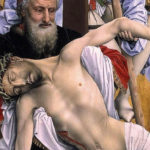
Section of The Descent from the Cross, Rogier van der Weyden, c. 1435

There is one ocean, but many waves.  Each wave has its own contour.  Some say there are no two alike.  Looking at the ocean one sees a body of water.  It seems like one thing.  The surfer sees a wave, great and inviting.  The visitor sees the same wave as a crashing event able to change a beach and pushing back earth vegetation.  All this is caused from the same ocean.  A great snowstorm as viewed by the populace is seen as destructive of trees and power lines, but an artist gathered hundreds of snowflakes in the freezing weather and viewed them under a microscope.  He found no two alike, but all were beautiful and part of one storm.  In… Read more

Heaven’s Perception

Section of The Crucifixion, Pedro Orrente, ca. 1625–30

One of the monumental omissions of modern life is the loss of awareness about values.  This loss has become so prevalent that even educational institutions may back away from serious discussion about them. Some openly say they leave the topic to religion. But, ideals make quality persons and societies.  If values were to return to their proper place in lives and society (beginning with individuals and families), for all human behavior, we would create a refreshed world that would restore: some ideals and meanings that have been lost or muted; some objectivity about the parameters of life; some clarity about how persons should function in all they think and do.  Out of this renewal there would emerge heightened sense of… Read more

Human Transcendence

Section of Christ and the Adulteress, Lucas Cranach the Younger and Workshop, ca. 1545–50

There is meaningful human transcendence possible to any person, whether that person believes in God or not.  Many persons miss it, some partially and some almost wholly.  One wonders if a normal person ever loses it totally.  It is based on what we may call, for purpose here, humanity.  Take away man’s humanity and we have an animal, even an animal who can think, express ideas, and a better context for living than any other animal.  For evolutionists who do not espouse God, that is what has happened to homo-sapiens in emerging from the primordial to present state.  Even then there is room for human transcendence in that we have arrived at a height of the emerging processes.  That is… Read more

All Things New

Section of Sistine Chapel ceiling, Michaelangelo, 1508-1512

The eminent G. Campbell Morgan, the English preacher and Bible expositor, was invited to America for a series of public services.  They were advertised, located in a large and commodious auditorium, and well attended.  Mrs. Eleanor Roosevelt, wife of Franklin D. Roosevelt, who became president of the United States, was invited to attend a service.  She did so.  Morgan was clear about the biblical plan of salvation. After the service, when her host asked about her response to the sermon she replied, in essence: I believe there is a God.  If there were not, this whole performance of man would have no meaning.  But, I do not feel the matter of redemption is for my understanding and experience.   Her observation… Read more

Gentleness

Section of The Crucifixion, Pedro Orrente, ca. 1625–30

A major resource, Scripture uses the illustrations, analogies and parables of nature to teach spiritual truth.  To understand the nature and characteristics of the world and firmament is to gain a context for life both for the here and the hereafter.  What we recognize as agricultural analogies (parables) were used by writers, prophets, Jesus and their sympathetic contemporaries to teach something about God and his relationship to mankind – and mankind to God.  It is likely that we make too little application, or miss meanings that might be accented if we were to give more time to the educational procedure.  For example, Scripture informs of the Fruit of the Holy Spirit.  Fruit comes from a plant – tree, vine, or… Read more

Freedom And Law

Section of The Crucifixion, Pedro Orrente, ca. 1625–30

Americans are taken by the concept of freedom, even if they do not know what it is in its highest meaning.  In humanism, nearly all Americans think of themselves, even believe themselves, to be free.  We suppose we have some freedom, if we believe we do.  Inner freedom is the most important dimension of freedom.  It may be that the context in which some persons live is comfortable for them, so they feel free.  We may not be truly free.  Taken with an addiction, even life threatening, we may yet believe we are free.  We may be free from government detainment, so report we are free.  But, taken by habits that rob us of genuine freedom which, in such case… Read more

Increments

A search was made to find the great achievers of the world’s history. The scope of the study included all the major nations of the world and recorded cultures through the centuries.  About four thousand names emerged.  The search and review was a worthy project.  Not only were the factors of greatness identified, but we can isolate the group from the rest of the world to help interpret what real life is all about for the masses.  What have millions upon millions of persons achieved who have gotten through their life sojourns successfully, without greatness?  World history belongs to these last.  Some of them did not believe in God, and some did, but they in rather high percentage more likely… Read more

History And Historians

Section of The Last Supper, Leonardo Da Vinci

Late in the 20th century there was a resurgence of interest in the founders of The United States of America.  Numerous biographies were published.  Each writer made an emphasis of his own.  Reading several books on each life (Washington, Franklin, Adams, Jefferson, Jackson, Lincoln, the Roosevelts and others), I formed fresh opinions about each, relating to them, their personal lives, religious views, effectiveness, ideas, strengths and weaknesses.  The focus here is on one factor mentioned earlier in these Pages: the religious orientation of George Washington.  Biographies of the decades infer or assert a deistic position for Washington, which position makes God irrelevant to the world of human affairs.  Several allege that Washington did not refer to Christ; that for a… Read more

Democracy

Section of Christ and the Adulteress, Lucas Cranach the Younger and Workshop, ca. 1545–50

Democracy must mean, in our era, representative government.  It is too unwieldy to be applied well as might occur in a small community where discussion reaches all, votes are quickly counted, distortion and corruption are easily recognized, volunteerism or sacrificial service is common, and politics are at a minimum.  A nation with massive population centers, invites all sorts of human problems, of which many are the natural results of a lowered exposure of the individual related to the mass, and the sheer size of the problem of meeting the needs of community where community control does not exist, or has been so diluted that it is no longer equal to problems.  In colonial America the community spirit was strong, sometimes… Read more