Daily pages of reflection...for knowledge, understanding, to wisdom
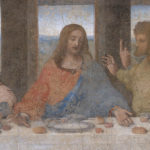
Section of The Last Supper, Leonardo Da Vinci Section of The Last Supper, Leonardo Da Vinci

Currency

Section of Adoration of the Magi, artist unknown

When one has made a living using words, and enjoyed the occupation as much as I have, there is an inherited feeling that there must be a way of editing writings or speeches so to better present the ideas that insightful, truth seeking, life respecting, value accepting persons communicate – or try to communicate. I have studied the oral and written rhetoric of history to the present day, and much of the evaluation of it.  The doctorate I earned from the University of Washington has the word Rhetoric in its title.  Sermons, speeches, essays, lectures and the various forms/processes of language to elicit belief and action have been the meat and potatoes of my secular intellectual life, and closely inter-related… Read more

Fellowship

Section of The Crucifixion, Pedro Orrente, ca. 1625–30

As children we covered hurts by saying: Sticks and stones may break my bones, but words will never hurt me.  But they do.  We perceived physical punishment to be natural, but words didn’t spank.  We learn that they can, when some communication is in.  The defense mechanism of a can’t-hurt-me response may work to a degree, if we are mature enough to remember that much of language is used without serious thought (casual words we can manage or defuse) and, without mutual meaning between sender and listener. If we are sophisticated sufficiently well with language, we know spin may be put to meanings.  So the analysis might be extended relative to semantic problems.  Common language can heal and/or hurt. One… Read more

The Love of God

From several Scripture passages, we are given information, generally partial in scope, about God’s nature.  This is sometimes veiled so that imperfect mankind is not too overwhelmed with the realities of perfection, holiness, and the many attributes of God.  We might despair of any adequate acceptance of ourselves, a prelude for our search for God – so to have him become engaged and personally integral to our lives.  One has to feel some worth for self to believe that a person like God would give attention to something that is, without God, of little value.  We receive life for a few decades, and die.  Why should God bother with that scenario when there are magnificent angels for fellowship, if fellowship… Read more

Biography

It is said that some persons wished they had never lived.  This was, in normal persons, from a feeling that they had been somehow mistreated, by ill health, by grinding poverty, by perceived serious unfairness in the course of life, even by a sense of abandonment by God.  We are not concerned here with persons who may object to life because of, say, depression – so in a darkness of emotion and mind, take their lives in suicide, achieved directly by their own hand, or indirectly, by debilitating habits.  This discussion could be enlarged in exchanges about those we might wish had never been born, as disfavor with the birth of Hitler, or Stalin, Herod, even Alexander the Great, among… Read more

Culture of Generations

Section of The Last Supper, Leonardo Da Vinci

It is well known in sociology that adult societies commonly complain that youthful generations usurp popular public life.  The real reason for this usurpation in any era, when it occurs, is likely that an energetic youth generation is emerging to adulthood, and wants to form its own image.  It feels that the older generation has missed something.  The feeling may be real, or alleged.  The young feel that somehow their power begins with a kind of puckish rebellion against the establishment.  This is aided by other forces.  At this writing it relates to the economy and entertainment.  The young generation is provided with much of transient wealth, often gained through troubled parents of the children.  The young are the spenders. … Read more

Presupposition

All persons own their own presuppositions.  Presuppositions emerge from several directions, and are interpreted in the light of experience, experience to verify or change to other emerging presuppositions.  In future experience, our presuppositions commonly change.  Some presuppositions certainly will change.   For example, if my presupposition is that God created mankind in Adam and Eve, in a gesture of marriage for one man and one woman, I will have a greater motivation to expect and make an effective marriage than would attend if I had some other presupposition about marriage.  I also have the presupposition that anything Jesus would approve, I would approve.  When Jesus supports the solidarity of marriage, in the context he lays out in Matthew 19:3-12, I accept… Read more

Spiritual Life

Section of The Taking of Christ, Caravaggio, 1602

The spiritual disease of sin centering in the soul/mind, may be likened to cancer in one of the organs of the body.  Cancer is a problem indicating death if not treated in time and with effectiveness.  I was diagnosed with cancer in 1966, and instructed by the physician to put my affairs in order.  He saw the malignant melanoma as life-threatening for me.  A surgery proved the diagnosis.  Several months later another surgery followed to excise lymph nodes that appeared to be infected.  In 1984, and unrelated to the first cancer, I was diagnosed as having prostate cancer.  This was more serious than the situation from seventeen years earlier.  I sought a second opinion, from a specialist at the University… Read more

Mending Lives

As persons emerging into adulthood, our first duty is to take responsibility for our own lives, with the understanding that we need something more than biology.  So, if we are diligent we discover what is missing, find it, assimilate it, all used in continuous formation.  God would say we need something more than repair as a beginning process, so he provides spiritual experience, an experience that will take the rest of our lives to work through, which includes sustaining for both natural and spiritual life.  We may need some dramatic event, or events, that reveal to us – ourselves.  Cain did not find himself until confronted by God after the murder of his brother, Abel.  It was not the murder… Read more

Inner Conflict

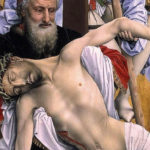
Section of The Descent from the Cross, Rogier van der Weyden, c. 1435

At this writing the American society is wounded by the rash of suicides among young students – reaching down even to preteens, and by dangerous behaviors suggesting that many of the young men and women are deliberately careless about their safety and respect for life.  A number of boys and girls have taken their lives because of bullying accented in and around the schools they attend.  Various programs are being studied in an attempt to forestall further tragedies.  I remember the fear I saw in my younger daughter in grade school running to my nearby office as an older lad accosted her, chased her, and caused fear that made her cry, and wish that she did not have to go… Read more

Memorial Day

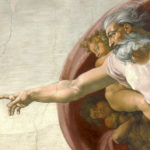
Section of Sistine Chapel ceiling, Michaelangelo, 1508-1512

Memorials refer to the past – for the future.  They appear in most contexts of life.  Their purposes are several, but generally to remembrances of the contributions, the braveries, the sacrifices, of those who have gone before us – near or far from our present, and especially if the cause included martyrdom.   They touch us to tears and cheers.  They suggest better parts of our own lives for improved performance.  There is admiration, regard, achievement and honor.  So the world is dotted with statues of generals on horseback, statesmen in frock coats and a lifted hand, even a baseball player holding a bat or glove.  Israel raised a pile of stones.  Many have a logo or coat of arms.  Christians… Read more