Daily pages of reflection...for knowledge, understanding, to wisdom
Section of The Last Supper, Leonardo Da Vinci Section of The Last Supper, Leonardo Da Vinci

Motives

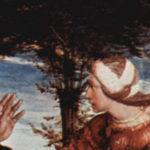
Section of Noli me Tangere by Hans Holbein the Younger

Today I return to a favorite theme, the grace of God.  That grace is found in context with two subdivisions: 1) – common grace; and, 2) – divine grace.  All persons, whether devout or profane, have the benefit of common grace.  It levels the field in nature for all persons, and makes of every person God’s citizen of the world and God’s sustaining of nature’s life.  What is the right of one is the right for all.  Violations of common grace are sometimes punished by mankind, and sometimes by God.  The punishment from God is not easily tracked, but there are strong allusions to how that discipline is meted out.  It appears in nature, the context for the functioning of… Read more

Godding

Section of Adoration of the Magi, artist unknown

A major obligation of Christians is to witness their faith, but there is also needed sophistication related to the possibilities.  There needs to be instruction for how the privilege and duty ought to be carried through.  As this is being written there has appeared, on public television, paid advertising of denominations and religious groups making rather concise and appealing witness of what the speaker believes, in the context of a lay citizen.  This has been done rather well by members of the Mormon faith.  The effect of the project has not, at this writing been evaluated.  A number of Christian radio stations in America and several internationally, have been on the air for many decades.  (I served as the news… Read more

Time Bytes

Section of Christ and the Adulteress, Lucas Cranach the Younger and Workshop, ca. 1545–50

One of the major objectives of these pages is to make clear that the first goal of education, formal and informal, ought to be for life – both personal and relational.  Scripture offers the first commandment to mankind when God informed Adam and Eve to: . . . . dress the garden and know it.  It is with this straightforward, clearly understood directive, that mankind began life as the demigods of earth’s living things.  They were given the responsibility of making life (plant and animal) what it ought to be.  In this assignment, we of the human race determine even life and death for planet experience.  To know how to achieve the best context for life we need education.  From… Read more

The Christian Course

Section of Sistine Chapel ceiling, Michaelangelo, 1508-1512

Anyone reading these Pages is bombarded with the word context.  I have tried to live for nearly eighty years in a Christian context.  I did fairly well, but sometimes unsatisfactorily.  Improvement (growth) was nourished.  From wide experience, I firmly recommend that, under God, each person take charge of his or her life – to cultivate and nourish it.  Do not be deterred by others who overstate, understate, or simply misstate our places in the world, either in personal (private) or relationship (social) life.  Such confidence is generated in the assurance that one is pursuing, and is responsible for, a constructive course for a Christian holistic life (context).  This quest is a worthy one for here and will further clarify hereafter…. Read more

Value Rationalizations

Section of The Infant Jesus and St. John the Baptist, Guido Reni, n.d.

In a magazine advertisement for an edition of the Bible, a lead-in thought was accented: NOTICE: Prolonged Use May Result in Maturity, Wisdom and Character.  The words ring true, but may invite oversimplification, perhaps even distracting in some contexts.  A purpose of education ought to be related to thoughts and words in context.  The person who can mentally separate alfalfa from roses, and understanding that both plants have value in particular contexts, and may be troublesome in unrelated or fragmented contexts is well ahead in the ephemeral conflict between ignorance and knowledge, between the ideal and the objectionable.  Context does not feed roses to cattle and alfalfa to a bride. We ought to begin, as responsible persons, with a rather… Read more

Routes

Section of The Descent from the Cross, Rogier van der Weyden, c. 1435

Truth has an excellent reputation, sometimes diluted because of the varieties of contexts in which truth may be cast.  Truth for one context may not be truth for another.  In this paradox/contradiction may rest eternity, even God.  A massive number of intelligent human beings do not believe in God.  Therefore, they do not believe in a theology that posits God, and they doubt benefits that they believe are only alleged to be available from God.  The biblical Christian believes that since there is God, some of the truths of the humanists are false.  The Christian ought also to believe that if there is no God, most of truths of theology are false.  The Christian has a treasure of factors that… Read more

Jealousy

Section of Noli me Tangere by Hans Holbein the Younger

It is rather easy to feel sorry for oneself.  I sense it in counseling sessions and reading about the lives of persons and groups.  The idea and experience carry over even into national masses.  The attitude seems effective in the distortion of lives, and may become serious to major decline of the human spirit, even the soul.  Analysts warn minority groups not to be caught in victimization from the past – some documented injustice upon forefathers that is carried over to the present and injected upon the current generation in seeking retribution.  These and other infractions of right and justice, even other sins, are treated by God in forgiveness.  It works.  One wonders if the emergence of the Asians in… Read more

Thought Transfer

Section of The Descent from the Cross, Rogier van der Weyden, c. 1435

Poets are really philosophers, even theologians, sometimes capable of humor for depth of feeling and thought, but they do not quite qualify for appointments to philosophy chairs, so they are claimed by the English Departments of our colleges.  They do not otherwise qualify because they permit their carefully chosen words, expressing their personal beliefs, feelings and observations in such a way that readers must interpret them in the beliefs, feelings and observations of their own.  Philosophers serve purpose when they feel they have hit upon the answers to the questions addressed, and students concentrate on interpretation.  When reading poetry as The Sonnets from the Portuguese, by Elizabeth Barrett Browning, the reader is carried well along in the love Elizabeth had… Read more

More About Humor

Section of The Taking of Christ, Caravaggio, 1602

Of late I have been giving more time to reviewing the comedy/humor/drama of the American people, as played out in my lifetime.  This is my native culture, so it is not world opinion, but I also believe there is something in any culture showing basic components that reveal mankind in our attempt to know and manage self, even in serious experiences of life.  Much in comedy (joking and surprise), humor (some of life’s distractions and follies), and drama (scenes of imagined or real life) – all become serious to us in the study of self, life experiences, and even God.  Laughter deserves solemn evaluation – for good and ill. My first conscious awareness of comedy came in my childhood home. … Read more

Holistic

Section of The Descent from the Cross, Rogier van der Weyden, c. 1435

We need personal wholeness.  Those who study the topic sometimes refer to it as holistic so as to give it the specificity that relates to the individual person.  The reality of wholeness relates to truth, integration, righteousness, and person so consistency in action.  It is important to recognize its reality, making whatever adjustments and changes needed to make sure we are singular.  We are not hypocritical in that integrated person we ought to be.  He or she is most whole in the perception of God’s righteousness who: is free of self- division; is consistent in thought and action; is oriented to self-improvement; and, is genuine to other persons and to God’s created world.  This relates to integrity in a person’s… Read more