Daily pages of reflection...for knowledge, understanding, to wisdom
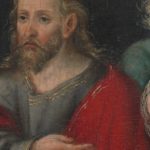
Section of The Last Supper, Leonardo Da Vinci Section of The Last Supper, Leonardo Da Vinci

Time and Immortality

Section of Christ and the Woman of Samaria, Benedetto Luti, 1715-20

American life is said to be becoming increasingly frenetic.  There would be no complaint about that express energy if it accomplished personal constructive purpose – equated with the time factor.  That is to say, that if that pace and activity contributed to better persons and relationships, even accomplishments, one would find ways to advance the practice of speed.  It is suggested that we have speeded everything up but at the expense of genuine accomplishment as God would find in his value orientation.  There is a safe speed to drive, but we must go faster.  We even walk faster, except during vacations.  Media have speeded up commercial speech, sometimes with poor diction, but increasing time for more commercials.  There is a… Read more
Touchers

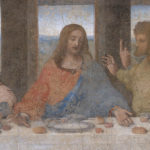
Section of The Last Supper, Leonardo Da Vinci

God holds high value for our bodies – he made them.  A part of the divine story is that the body will ultimately be restored in resurrection, foreshadowed in the resurrection of Jesus Christ.  The Apostles made clear that what they preached of God and Christian living was verified in the resurrection of Jesus.  The prodigality in which so many persons follow course in the care and activity of their bodies intimates that they do not hold as high opinion of the mortal body as God does.  It is interesting that studies show that persons of faith average more years to life than those who do not.  I would imagine that those who, in faith, give proper attention to their… Read more

Unnamed Miracles

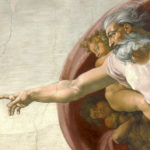
Section of Sistine Chapel ceiling, Michaelangelo, 1508-1512

For those who believe that God can interrupt nature at his own bidding, it is important to weigh the uncertainties and distortions in the general population related to beliefs in miracles.  If there are miracles they are interruptions of the patterns of nature.  Understanding miracles, or even the existence in true miracles, declines with the greater acceptance that life and phenomena are guided by the disciplines of science that do not court miracles.  For persons who do not believe in a personal God, or those who accept the parameters of science as the only source of truth for all things related to mankind, the concept of miracles is not only unbelievable in nature’s reality, but may be an enemy of… Read more

Conflicting Greatness

Section of The Last Supper, Leonardo Da Vinci

We are instructed that every person desires a place in the Sun.  There is so much activity, singular or group oriented, to gain recognition, usually, but not always, to gratify that thing in the human being that wants to be more than a cipher.  Who will know a century from now that we lived or accomplished anything?  The adventuresome spirit makes us go for this or that, so to raise us a bit above our ordinary neighbors, the regulars of society.  I am often intrigued with the stories of the first in anything.  Men who wanted to say they were first at either the North or South Pole are illustrative of what I mean to convey here.  One follows the… Read more

Life Ingredients

Section of The Last Supper, Leonardo Da Vinci

Who, and/or what, are the enemies?  They are many, and of variant meanings to our lives. We ought to begin the debate with an old saying: I have met the enemy, and it’s us.  When my orientation is freed from victimization (life circumstances are stacked against me), I sense a freedom to find my way to life.  Under God, if God is in truth a factor in my life, there is no victimization.  Negatives, at every point, are part of the natural/spiritual story, so I may factor that perception constructively into life processes.  I ought to take the circumstances and make something of them if the transition of human mortality is to be made to serve a better situation relating… Read more

Creativity

Section of The Crucifixion, Pedro Orrente, ca. 1625–30

Persons of faith should sense the reality of faith as related to the arts as well as to nature for expression. Here we make the comparisons and contrasts to natural and supernatural contexts.  Certainly the point will be made that the arts are a part of nature.  The best art, in some form, captures nature, and whatever is presumed related to it.  One follows the self-portraits of Rembrandt, from the first rakish looking fellow to the older fading visage who seems to be some other person than the first portrait depicts.  Here is Rembrandt as he saw himself in a mirror.  We know there is something vital in us that relates to nature, but we also know that the creative… Read more

Old Age

Section of Christ and the Adulteress, Lucas Cranach the Younger and Workshop, ca. 1545–50

I was struck with the statement of Billy Graham, the eminent evangelist, on his arrival to his ninetieth birthday – that he had been taught how to live and die, but not how to grow old.  I agreed intuitively with him on the statement, but gave time to the point and now write after having thought at length about the common oversight.  I have long believed that persons are not usually troubled so much about death as they are about the decline in the physical body, perhaps also the mind, with the management of suffering, of isolation, of marginalizing life as factors more difficult to accept than death.  Who would not prefer simply to pass away in sleep, not having… Read more

God’s Pleasure

Section of Christ and the Adulteress, Lucas Cranach the Younger and Workshop, ca. 1545–50

What is the significance of being, to self-awareness?  Separate from undue pride, and repulsive arrogance one needs to understand the meaning of human worth, with this realization becoming personal blessing.  Significance ought to be positive related to what an individual may become, but also understood from other perceptions.  Think on these things so to gain balance and meaning for life, both mortal and immortal.  One of the greatest factors in all this mystery is an appreciation for life itself.  Life is evidence of God. It is well known that human beings tend to put their own spin on just about everything.  That is their own interpretation, to what they are and where they fit into the creation.  They may even… Read more

Needs

Section of Noli me Tangere by Hans Holbein the Younger

The early Church is sometimes characterized as having introduced Christian Communism.  One does not shy away from that identification as long as it is understood for what it was.  Not all Communism is to be defined by the Marxist tenets or derivatives.  The words related to the word need in the Bible passage touch on: destitution, want, or requirement.  The meaning relates to rights.  Mortal survival is a right directed by God in human circumstances.  We now hold rather firm belief about what rights are.  Rights ought to be provided to all in some legitimate way.  Jesus covered the idea succinctly, as he did for many temporal issues, with a clear statement to his followers, indeed a statement to all… Read more

Human Oddity

Section of Noli me Tangere by Hans Holbein the Younger

A problem we commonly face is to manage human differences.  There is an unspoken inner feeling that we should be more alike in that we have elbows, noses, mouths, ears, elbows and toes.  We have a rather clear idea about where to find them on every person.  The distortions we see in someone like the Hunchback of Notre Dame almost forces the vast majority to want to hide these persons from view.  They violate our limited picture of what persons should look like – if they are physically normal.  Some societies, stern about expectations, will take the life of the new-born, if deviation from normal is discernible.  Even gender identity may mean death for a child, as occurred in China… Read more