Daily pages of reflection...for knowledge, understanding, to wisdom
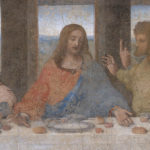
Section of The Last Supper, Leonardo Da Vinci Section of The Last Supper, Leonardo Da Vinci

Opposition

Section of The Crucifixion, Pedro Orrente, ca. 1625–30

These Pages acknowledge mystery as a major factor in discussions relating God to mankind.   We can sometimes push back borders of mystery recognizing and evaluating some elusive evidences in our search.  The advancement of an idea or action ought to engage knowledge, conviction, intelligence, and related differentials in advocating any truth, even facts’ meaning, and the implications of the theme of the context.  For example: my father’s first marriage failed.  Two years later he married the young lady who became my mother.  One day he returned from work when I was about 18 months old, and my twin sisters at 3 months.  He had tuberculosis, was afraid, left his wife and babies and went to his mother and sanatoriums.  He… Read more

Improved Means To Unimproved Ends

Anyone following these Pages with some regularity knows that there are several themes (complexity is one) that I feel are important, and insufficiently treated in the education of persons, secular and/or devout.  God, as creator, is concerned for all persons regardless of their faith/education orientation.  Each is treated with sympathy in a personal context, which context is also social when including other persons.  We were made for fellowship, with other persons, and with God.  The need was detected in the first experiences of Adam and Eve.  If God is omitted in a person’s life, he (God) remains to make the fellowship of a person (individual/singular) with persons (social/plural) pleasant for all who will have it so.  (Mankind, in this generalized… Read more

Ending to Begin

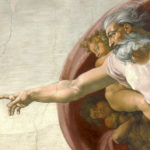
Section of Sistine Chapel ceiling, Michaelangelo, 1508-1512

Having written a daily Page from time to time, beginning just after my wife’s death in 2001, I had completed the series for each day for one year by 2009.  That included editing each Page about six times so to gain what I wanted for the Page.  Then, with some wits left to an old man, I decided I wanted to do it again, so began Volume 2 in 2010.  Further, I wanted to continue, usually but not always, on the same date, the basic theme of that date from Volume One.  No real reason, except that it seemed like a fresh approach that might gain interest, and that it would offer a way for me to continue thoughts that… Read more

Self Interpreting

Section of The Taking of Christ, Caravaggio, 1602

This is being written on October 7, 2011.  Two days ago Steve Jobs died.  He was, for design and management, computerization, style of work and communications, what Henry Ford was to transportation.  The outpouring of responses to his family and to the news world has been astounding.  It is greater (numbering millions of unsolicited responses) than was the news of Thomas Edison’s death in the early 1930s.  (I was in grammar school, and remember vividly the solemnity and respect of my teacher in announcing that Edison had died.)  The response related to Jobs is greater in that the population is so much larger and communications have become a hobby in electronics for the masses.   Serious discussion is under way in… Read more

More On Wealth

Section of The Last Supper, Leonardo Da Vinci

We are not blessed with perfect or even adequate reporting in some areas.  We are at the mercy of persons who, despite their credentials and best work, must fumble a bit in presenting whatever it is that they are interested in advancing.  From books and teachers we learn that: Virginia was more wealth-oriented than the more religious New England contemporaries.  But while the Puritans might have been intent on building a shining city on a hill, they also regarded economic success as a sign of God’s grace and pursued wealth, sometimes energetically.  Puritans often put at the head of their ledgers: In the name of God and profit.  Is the reader to believe the northeast was secretly crass or greedy… Read more

Situational Ethics

Section of Christ and the Adulteress, Lucas Cranach the Younger and Workshop, ca. 1545–50

Each era, in its popular context has its dominant ethical pattern (strong or weak) that seems fitting to the majority of citizens, or at least dominates in the attention of citizens and the pundits, some of whom are crying in the wilderness.  The dominant pattern forms the social situational ethics during any given period.  It is not the only standard or even the majority standard, but seems to be in the reporting, and by which others are checked in degree of acceptance and practice.  Each might be identified with some popular identification symbol, and elucidated in the context of a prevailing attitude and practice.  Currently we have, in the dominant group, what I would call the Blue Jean era.  It… Read more

Rationalizations

Section of Christ and the Woman of Samaria, Benedetto Luti, 1715-20

Rationalizations are suspect.  We know they are at the end of a wandering route of the mind and emotions related to some thought, action or object.  The way to the rationalization may be cast to appear like rational, evidence driven, patterns for determining truth, but search is poisoned by non sequiturs, by emotions, by unreliable presuppositions, and assorted debris that makes difficult the route search for truth.  On some occasions we hit upon things as they are, because common sense verifies the conclusion.  On some occasions the matters are unimportant, so we can get on with our lives, principally as touched by numerous small factors of little consequence.  The objection to rationalizations is that they are unworthy and ineligible to… Read more

Human and Divine

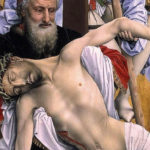
Section of The Descent from the Cross, Rogier van der Weyden, c. 1435

One of my several mind games is related to wonder about how everything goes together in the mind of God.  For example, what is the meaning of work?  I refer to ordinary work, like daily chores and their status with God.  When I read the Bible carefully I discover how important work is in the plan of God for human life.  When I was a lad my mother assigned regular chores that included, for example, carrying out the water from the melting ice in the icebox.  I didn’t really warm to the assignment, until one day I sensed that I was contributing to the good of the household.  I was learning to work, as part of nurture.  In time I… Read more

Life Follies

Section of Noli me Tangere by Hans Holbein the Younger

It is interesting that the public tries to find luxury during recessional times by entering vicariously into media displays, or the lifestyles of well financed celebrities.  Style shows become even more gaudy than usual during down times in the economy.  Currently tattoos have become popular with about 10% of the population, repulsive to more than 50%, and tolerated by all.  Grooming of body, hair and clothing has become bizarre for some, but casual to grungy for others.  I have not seen women wear the garish dresses shown in the fashion reporting, but I am told that the pattern has something to do with shopper choices, especially in colors, and hemlines or the current emphases of body parts.  Presentation seems bizarre… Read more

Happiness

Section of Sistine Chapel ceiling, Michaelangelo, 1508-1512

Articles and books are appearing in greater numbers on the subject of happiness, of contentment, of better inner feelings for the general population in America.  This is stimulated, in part by the woes of these first years of the twenty-first century.  The declension relates to various causes or sources in the: economic decline; rancorous partisanship; greed or private interests of some movers and shakers; unwillingness or inability of persons to solve problems, as demonstrated in permitted declines in public education; change in family tradition; climate shift and shortages/costs of resources including water and fuels; and, persistent tensions of terrorism, most commonly perceived in variant upheavals, especially related to continuing warfare abroad.  The problems are somewhat exacerbated by the news reporting… Read more