Daily pages of reflection...for knowledge, understanding, to wisdom
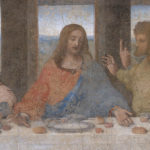
Section of The Last Supper, Leonardo Da Vinci Section of The Last Supper, Leonardo Da Vinci

Church and Change

Section of The Crucifixion, Pedro Orrente, ca. 1625–30

We remember that the only natural factor the population can count on during human experience is change.  It is presumed that those most amenable to change are most able to manage life in the natural environment.  The concept of change is clearly depicted in nature.  We learn early in school that there were glaciers, fires, eruptions, floods, and other forces that introduced change to communities and the world.  The flood of Noah’s time might make an interesting discussion on the topic, if we knew all the details of the event.  Even Noah had some difficulty with the transitional changes.  At this writing much of the news and conversation is occupied with the concerns of global climate change, especially as related… Read more

Human/Divine

The urge is strong to go through Scripture, identify passages where persons can put their own spin on the divine word, and proceed to their own perceptions and interpretations, not really interpreting the text.  Acts 6:14 is one of those instances.  Jesus did not say the temple would be destroyed in making clear that he was proceeding to enlarged meaning for all, not only Israel.  It is common to extend our interpretation of another’s point to the disadvantage of the author.  Evaluation and interpretation ought to have been made about such misconceptions about Jesus’ words, noted above, on whether the new served better the purpose of the old, so to provide adequately the benefit of God for all persons.  Tribalism… Read more

Culture

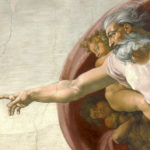
Section of Sistine Chapel ceiling, Michaelangelo, 1508-1512

It is important to remember that the only factor that we can count on in standard living context is change.  Rather effective studies from opinion polls to research programs have held firmly to that conclusion.  We accept the conclusion, for now, in the belief that it is the best summary we have for the present.  However, this acquiescence does not really simplify our lives in that we now must account for the variances of change, the areas affected by it, the distortions of it.  The queries add up so to make understanding difficult and conduct emphases are distorted.  Change carries its own peculiar force in society.  Persons embracing change, without managing at least some of it, appear to distort their… Read more

Change

Section of The Last Supper, Leonardo Da Vinci

Agents of Change, is a popular slogan for candidates for office, for a new CEO of a business, for nearly anyone who wishes to bring a fresh and creative plan to the frame of reference (context) he or she is addressing.  We often fail in the experiment for change for various reasons.  We are imperfect so we bring imperfection to the organization.  We do not know enough to make many ideas work.  The attitudes of our inherited colleagues, pleased with some security they had gained, or process they have gotten used to, resist change.  Society moves on at a moderate pace, so change ought to be in smaller increments than many change-makers would have them, although change has speeded up… Read more

Games and Christians

Section of The Crucifixion, Pedro Orrente, ca. 1625–30

I enjoy athletics and sports.  I have my favorite teams, and suffer a bit when they lose. In reading broadly, especially in national newspapers and magazines, both secular and religious, I find numerous references to sports.  They intrigue me, and sometimes disappoint, in that some are poor articles and some excellent – but isn’t that true for writers in any field of interest?  As my years multiplied I realized from experience and reading how athletics and, for that matter, other fields useful to human experience have become highly meaningful in the popular culture.  I believe we are aided in rediscovering the place athletics historically held in the life of mankind, and how new meanings have diminished higher purposes with which… Read more

Christian Marriage

Section of The Taking of Christ, Caravaggio, 1602

Identifying factors that make up the context of a life, or society requires considerable care (from love), time, education, prayer, faith and commitment.  The more we search, the more likely we will feel that we know too little, even that some life questions may be unanswerable with our available terms or information.  One approach suggests that we are faced with life’s paradoxes and contradictions, and we are often unsure which term applies to the matter before us.  A paradox, in the simple meaning of the word, is something that has at least two sides to it that seem to be contradictory but are true in variant contexts.  Contradiction refers to at least two sides to an issue, one of which… Read more

Tough Love

We learn from the story of the prodigal son that love takes a variety of routes in its expression, and that there are several directions of learning from and about love.  We are reminded that love is the only factor that was named by all cultures in which a study of values was made, and polling carefully done.  No other factor, including wealth, happiness, peace and the like, gained total response.  Love is universally valued.  With so great perception of a specific factor, one wonders why our education does not accent more an analysis, and attending meanings: for effective living; for development of persons and families; and, for the contributions to peace and relief in human contextual living.  Our problem… Read more

Transitional Life

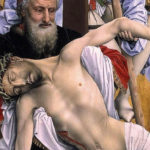
Section of The Descent from the Cross, Rogier van der Weyden, c. 1435

There are several viewpoints, especially those found in the younger members of the society, related to old age that should be addressed.  It is a given that aging means moving inexorably toward death.  For some the journey seems delayed, while others do not live long enough to be classified as senior.  It is interesting that Jesus inferred this when he noted that the length of life is seventy years, but by reason of strength some live to fourscore years.  I have lived long beyond even that extension.  It does strike me that 2,000 years ago, when life spans were much shorter on the average than they are now, that Jesus’ reference was not to the ancients before him who sometimes… Read more

Discipline Directions

Section of Noli me Tangere by Hans Holbein the Younger

One of the major factors in a successful life is discipline, especially self-discipline.  By success I mean gaining life quality (righteous motivations and values) and achievement (life’s work and relationships, especially related to family).  This context is likely to be gained out of the best applications of the person from a searched out vision about self and life.  To make most practical, the evolving vision should be engaged sooner than later.  Parents ought to be at the ready to assist their children in the process.  The process should be a part of parenting, but it is too seldom found in the prelude period of mature and happy living for the emerging generation.  It is surprising that parents will take on… Read more

Little Things

Section of Christ and the Woman of Samaria, Benedetto Luti, 1715-20

Little things become important, partly because of accumulation.  A massive hay bale is made from small stems with small leaves.  Many small things need to be cultivated so to assist larger matters, perhaps making bearable some unbearables in life.  I have referred elsewhere to the story of my wife making much of any birthday in the family.  I can recall her face when she would buy, or have me buy, something she knew someone wanted, especially for our children.  It wasn’t casual.  It was given value-added love and interest in the person or persons affected.  She was good at it, so that all I had to do was follow her lead and instruction.  Since her death, I realize how much… Read more