Daily pages of reflection...for knowledge, understanding, to wisdom
Section of The Last Supper, Leonardo Da Vinci Section of The Last Supper, Leonardo Da Vinci

Self Counselor

Section of The Crucifixion, Pedro Orrente, ca. 1625–30

How does a person counsel self?  There are various ways, but one must begin by insisting on stepping outside the skin, looking into the self with the attitude that I am going to be a bit stern with myself.  By stern, I mean stern enough.  To set up a goal that is beyond one’s competency is fruitless, may discourage improvement perhaps worsen the context needing attention.  In many situations issues are better treated in incremental steps, so to gain some momentum for problem solving.  It is enough to create a discipline that gains a good and proper end.  Probabilities and possibilities are marvelous aids in moving toward a desirable goal.  Most desirable goals require some payment of dues that come… Read more
Counselor Enemies

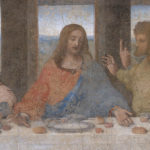
Section of The Last Supper, Leonardo Da Vinci

A major enemy to counseling is self.  We are so firmly tied to who and what we are, or presume we are, that we find it difficult to have anyone fiddle with our feelings, beliefs, tendencies, modus operandi, habits, secrets, relationships, or whatever dominates us at the moment.  Further, we either know, or sense that counselors are imperfect.  They may need counseling.  It may be that the blind will lead the blind.  In such an instance we would rather protect our own person, and environment, even if these were somewhat negatively formed with whatever has gone before – or going now.  Counseling can make matters worse. All this may lose the understanding of what makes an effective counselor, lay or… Read more

Listening Deeply

Section of Noli me Tangere by Hans Holbein the Younger

A benefit to me during the years I was a candidate for the Doctor of Philosophy Degree, was that I held the status of a graduate student in the university, but also was a professor of rank in a college.  I was admitted not only to student status, but professional as well which permitted me to interact with professors, principally in the fields of rhetoric, history and communications, at both a personal and extended professional level.  (I am grateful.)  In this context I learned patterns of academic life I had not thought about before.  I discovered that many experienced professors held back with students, for the reason that the students were not sufficiently tuned in to the full event of… Read more

Holiness

Section of Christ and the Adulteress, Lucas Cranach the Younger and Workshop, ca. 1545–50

Concepts of holiness/righteousness run deep into theology, understood in contexts where the word is used.  On this Page a year ago, the accent was on the refinement perceived between righteousness and holiness.  For me, holy accents God’s nature, when the accent is on perfect holiness.  Holiness implies righteousness, but righteousness does not have the depth and breadth of holiness.  Holiness can be reflected in righteous conduct and thought for Christians.  Righteousness becomes the human working of holiness in thought and conduct.  By his payment for the sin and sins of persons who accept his gift, Christ can declare the person holy (redemptive) in that he attributes his own character/nature to those who are his.  This is perceived as vital to… Read more

Do-Gooders

Section of Noli me Tangere by Hans Holbein the Younger

Much, perhaps most, of what appears in these Pages is well known to students of life, especially Christian students.  That is to say, those who perceive nature and God, good and evil, knowledge and ignorance, love and hatred and the additional multiplied factors making up daily life.  They are aware, and sometimes confused, by the normalcy of things, and how mankind can mess up the contexts.  These factors may be graphed as continua with negative factors to the left on lines, and the affirmative factors to the right – or the reverse recording.  The purpose of the continua is to try to find the gradations of the circumstances, perhaps percentages, of differences, from extremes, or within boundaries.  We know there… Read more

Naivete

Section of Sistine Chapel ceiling, Michaelangelo, 1508-1512

In the history of western civilization that gained strong intellectual footing in the Greek period of the ancients five centuries before Christ there was an important interest cultivated in mankind’s worth and dignity.  So it was that the philosophical development for the good life of secular persons gained sophistication in the western world, making a way to escape ignorance and superstition.  This was addressed in language which was made convenient in emerging concepts known generally as Philosophy.  Underlying emerging concepts was a sense of order and meaning, seen in the arts – the architecture, even the drama of the time.  Although important, music was used, but not developed.  That came centuries later. One aspect of emerging awareness included either God,… Read more

Counseling for Counsel

Section of The Infant Jesus and St. John the Baptist, Guido Reni, n.d.

One learns that what nature gives, nature takes away.  It is such a general rule of application that wise persons keep it before them in working through issues of life.  Offended by this paradox, both good and evil persons, complain about losses.  Someone is to blame, not me, but someone – perhaps God or the government, perhaps the rich moguls.  Rebellion may become tragic, even when it succeeds for currency in the general population, only to give complicated problems to future generations.  Wise persons knowing that drought and fire will follow rain and flood, prepare for alternatives.  It is a waste of time and talent to rail against fire and flood, or to delay action until repair seems impossible.  The… Read more

War and Peace

There are avenues of discussion in clarifying Christian theology related to individuals and society.  Some are narrow to the individual and others broad to the society.  The individual must make the story of redemption as first importance.  Each person must take care for self in the unfolded story of redemption through Christ to life immortal.  The biblical hope of the Christian is blessed immortality.  The social approach comes from the same source material as the story of individual salvation – the Bible.  There is overlap in the personal and social structures, but they may be discussed and evaluated separately.  One without the other context leads to the treatment of Christianity as mere religion rather than a concept of experience, experience… Read more

Minority Opinion

Section of The Taking of Christ, Caravaggio, 1602

Deeply devoted Christians may feel they are not fully accepted citizens of their country.  This is not an unusual orientation for any person related to a movement, a group, or some other entity that is not treated with full acceptance by the majority and controllers of a nation advancing secular norms. Some alternatives to gain better treatment and attitude for minority groups or ideas are unrealistic, given the context of the human psyche and methods of thinking and management – and the sheer size of the world’s population.  Sometimes the leading issue is competition, good and ill, that inevitably visits energetic people and nations.  Not all negatives are sinister in nature.  Competition inevitably follows with a cluster of related problems… Read more

Learning Societies

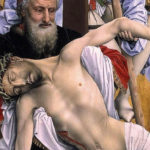
Section of The Descent from the Cross, Rogier van der Weyden, c. 1435

Sometime between Constantine and Charlemagne the Church became so influential to western life that history was written with church a major factor in the following centuries in the west.  A king stood in the snow until he received forgiveness of his actions by the Pope.  Artists and writers were supported by the church and churchmen.  An army of scribes not only copied Scripture, but wrote on other subjects as well.  The thirteenth century beginning of the Renaissance slowly changed contexts and outsiders joined in.  Scripture earned priority when the printing press was first used during emerging accumulations of a humanistic social world context.  In the Western World the new was greatly influenced by the history and ideas of ancient Greece… Read more